How Teachers and Teams Are Using Picker Wheel to Simplify Decisions

In a scenario where rapid choices are the main drivers to progress, the availability of instruments that make decisions easier might result in a great increase of productivity. To my surprise, the digital decision-making tools such as Picker Wheel that I have come across are gaining acceptance day by day among the technical staff, management, and groups who are in search of clear, equal, and active processes of their decisions that they make or take.
But before going into this subject more profoundly, understanding how Picker Wheel works may be in order as it shares a lot with the tactics applied in the buying of Google adspots through the management of the google adwords management services, and AdWords service providers. In like manner, those algorithms determine the best fit for the ads placed with respect to a certain audience based on impressions and clicks; Picker Wheel makes its choice on the grounds of being fair and, thus, random. Be it a call for participation in classes, a division of ideas in a company, or a rotation of the staff, Picker Wheel always prevents the occurrence of any personal bias and also takes away the wait time that is actually worth.
Teachers benefit from it, for example, when they use it as a randomizer for selecting students to ask questions or give assignments, thus making sure that each student has an equal opportunity. Likewise, the business teams use it for their brainstorming and project planning, or even when it comes to staff allocations. Google AdWords management companies and AdWords management services rely heavily on data analytics to make speedy decisions, Picker Wheel gives a comparable structure—but for daily human communications.
The Growing Popularity of Picker Wheel in Education
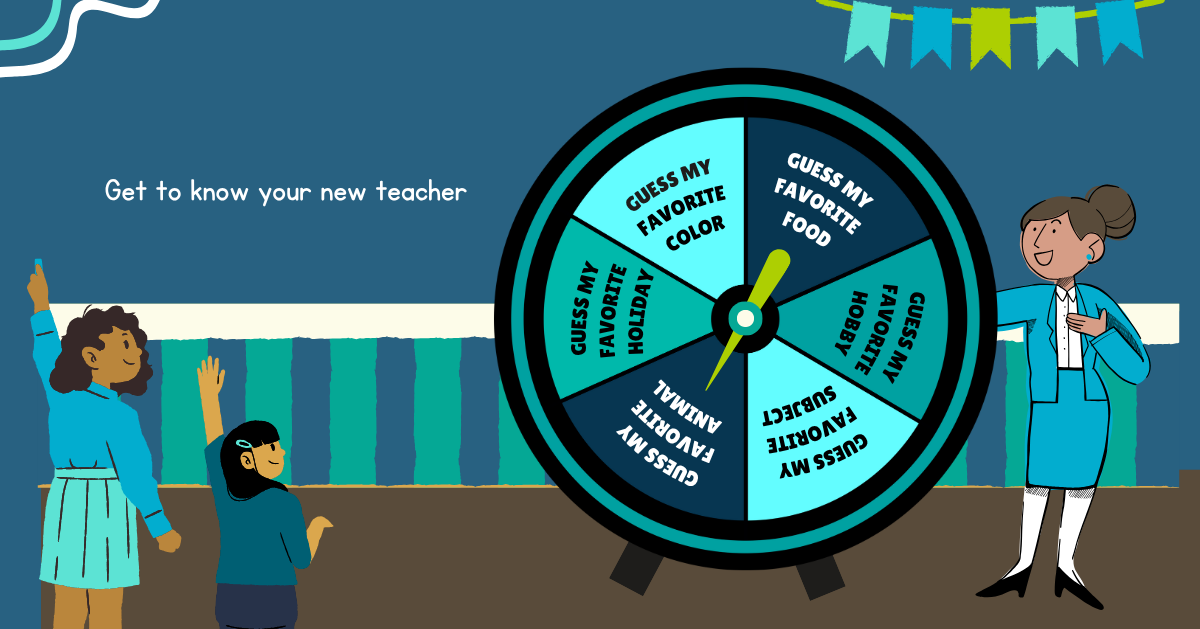
Market research has indicated that digital tools are changing classroom dynamics. Teachers are always searching for ways to make classes more engaging, interactive, and inclusive. And this is where Picker Wheel comes into play. It offers a fair, gamified way to choose students or delegate tasks in the classroom.
Based on my research, the use of interactive tools in classroom has been associated with increased student participation. The students are the ones to spin the wheel and the suspense adds fun and anticipation to their regular activities. Instead of getting nervous about being summoned they’d rather have the experience.
Furthermore, the use of Picker Wheel allows teachers to handle large groups of students more effectively. Instead of taking time to choose who will be next to answer questions or what subject will be the focus, they let the wheel decide. This approach not only saves time but also gives everyone the same chance to participate.
Key benefits for teachers include:
- Promoting inclusivity by giving every student an equal chance.
- Enhancing engagement through gamified decision-making.
- Reducing teacher bias in class participation.
- Saving time on classroom management tasks.
- Supporting creativity by randomizing discussion topics or project themes.
How Teams Are Leveraging Picker Wheel for Smarter Collaboration
Decision fatigue does happen in team environments. From my perspective, workers usually debate the pros and cons of options longer than the actual execution of those. Hence, many teams are now turning to Picker Wheel to help them make faster and unbiased selections.
Some of the activities where it is utilized by business teams include:
- Randomly assigning tasks to team members.
- Selecting winners for contests or giveaways within the team.
- Ranking projects according to their importance when there are different opinions.
- Picking topics for discussion in brainstorming sessions.
As per the outcome of market research, gamified decision-making not only boosts the employees’ engagement but also their participation in the meetings. If the employees perceive that the decision-making process is fair, they will be more motivated and willing to collaborate. With the help of Picker Wheel, a stressful and tedious task is converted into an enjoyable and interactive session.
Picker Wheel as a Productivity Enhancer
In my research findings, overthinking even the most basic decisions is a common problem for the education and workplace sector, causing bottleneck in decision-making process which in turn leads to slow progress, lost of creative ideas and team dissatisfaction. Picker wheel comes to the rescue by means of automating the selection process making it less complicated.
Think of a conference where more than one idea is trying to attract the attention of the participants. Instead of going through the matter without any conclusion, the team puts all the options into the wheel and lets it decide. This not only reduces the time spent but also makes it easier for the team to accept the result which they did not expect.
The tool’s effectiveness can be enhanced if it is compared with the workflow of a Google Ads management agency. Similar to an ad agency that depends on automation and data to sharpen campaigns, Picker Wheel adopts the deciding process in order to liberate time and mental power.
Integrating Picker Wheel into Daily Workflows
The educators and team supervisors have come up with innovative methods to use Picker Wheel mixed with their everyday activities. According to my awareness, this tool is flexible for many different uses, like in classrooms as well as in games for corporate bonding.
For teachers:
- Randomly pick up students to respond to the questions.
- Select themes for conversations or group works, or projects.
- Distribute daily classroom responsibilities or give presentations.
- Make rapid surveys or feedback meetings.
For corporate teams:
- Decide the sequence of presentations or pitches.
- Randomly assign review tasks or cross-team collaborations.
- Select team-building activities.
- Choose lunch spots or meeting themes.
According to market research, these integrations not only boost engagement but also lessen the stress that comes with making decisions. It helps both teachers and managers to give more attention to results rather than processes.
The Psychology Behind Random Decision-Making
According to my findings, people usually find it hard to make choices due to the fear of making the wrong choice. Picker Wheel, as well as other random decision-making tools, alleviate this fear. They switch the attention from “who makes the decision” to “what will happen next” by introducing randomness.
This method is used in educational psychology to the advantage of students, where it is seen as a way to promote fairness and reduce the awfulness of exams. This is also true in the business area, where power relations do not affect the final decision and the outcome is not influenced by biases inscribed in the hierarchy. I am quite certain that the feeling of randomness makes everyone involved feel equally important, no matter where it is—be it a classroom or a meeting room.
It is quite interesting that this concept is similar to the data-driven fairness that we see in the Google Ads management company’s strategy. Both strategies are dependent on algorithms—one is mathematical, the other is mechanical—to guarantee fairness.
Customization and Accessibility of Picker Wheel
Simplicity and accessibility are also the main reasons more people are choosing Picker Wheel. The application operates smoothly on different devices and its installation is very simple. To add more, market researchers have found out that the product’s personalized features—such as selecting the color, labeling the wheel, and controlling the duration of the spins—give users a chance to make the experience their own.
This is a perfect example of flexibility making the tool very close to any situation. Besides that, being a web-based application, it is not only the in-person teams that have access to it but also the remote ones.
In my research, I found that simplicity is the main factor that pushes a product to be adopted. Picker Wheel needs no training or technical know-how from users which makes it the perfect tool for all.
How Picker Wheel Builds Team Morale and Engagement
Decision-making doesn’t have to be dull or hierarchical. As per my knowledge, Picker Wheel introduces spontaneity that boosts morale. When used in meetings or team events, it breaks the monotony and encourages laughter and collaboration.
Employees often appreciate the fairness and transparency that come with random selection. It minimizes favoritism and builds trust. Teachers observe similar effects—students feel seen, included, and motivated to participate actively.
As per market research, engagement tools like Picker Wheel can increase participation rates by over 40% in educational and corporate settings. That’s a significant leap toward collaborative learning and teamwork.
The Future of Decision-Making Tools
As I have researched, technology is increasingly blending functionality with fun. Tools like Picker Wheel showcase how digital innovation can simplify human interaction. With more organizations embracing gamified solutions, we can expect to see Picker Wheel integrated into learning management systems and collaboration platforms.
The future lies in personalization and data-driven insights. Imagine a Picker Wheel that analyzes team mood or classroom dynamics to suggest optimal decisions. As per my knowledge, such integrations could revolutionize productivity tools, merging analytics with engagement.
Conclusion
In summary, Picker Wheel has come to the point of not being just a random name chooser anymore; it has become a user-friendly and effective decision-maker for teachers, groups, and organizations. Its easy operation, impartiality, and flexibility have turned it into a vital instrument in collective office work of today.
Market research states that the educators and professionals using such tools are getting benefits of improved attention, less worry, and better creative output. The randomness aspect brings about the feeling of inclusion and fun, thus proving that even the smallest changes in tools can make a huge impact.For people who are facing the difficulty of finding new ways to handle online campaigns, partner jobs, or digital strategies, the principles of Picker Wheel are already in place with a meta ads agency, a meta advertising agency, or a meta ad agency which uses automation and creativity together. Certainly, a plumber seo agency will use data to cut down campaign decision time while Picker Wheel will win human line through fairness and fun. The usage of such tools and even thinking about meta ads services can help create a digital marketing and daily teamwork environment that is more efficient, transparent, and fulfilling.